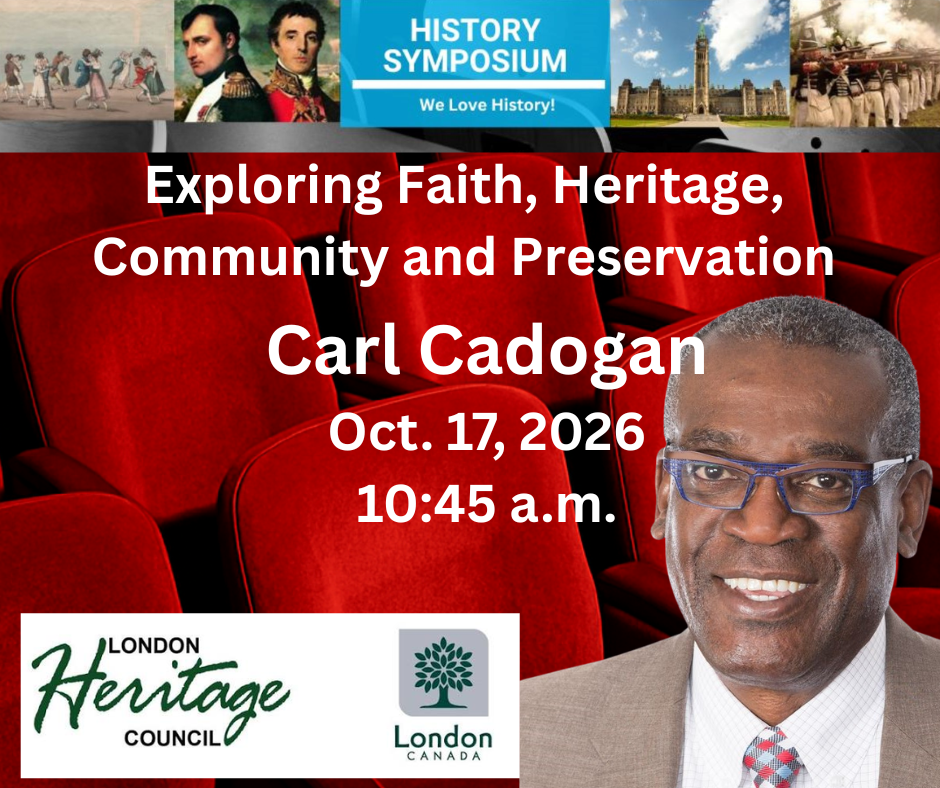
Exploring Faith, Heritage, Community, and Preservation
This presentation provides an insightful exploration of Black history in London, Ontario, with a particular focus on the African Methodist Episcopal Church (Fugitive Slave Chapel)—a significant landmark in the city’s journey towards freedom, community, and reconciliation. Attendees will gain an understanding of the historical context, the role of the Chapel in the Underground Railroad, and efforts to restore and preserve this heritage site.
The presentation begins by tracing the origins and development of the Black community in London, Ontario. It highlights the arrival of freedom seekers via the Underground Railroad in the mid-1800s, their establishment of neighbourhoods, and the formation of supportive institutions. Key events, influential individuals, and lasting contributions to the city’s cultural fabric are emphasized.
Central to the narrative is the Chapel, constructed in 1848 as a spiritual and social hub for Black Londoners. The chapel served as a sanctuary for those fleeing slavery and played a vital role in fostering resilience and solidarity. Its historical significance as one of the oldest buildings related to the Underground Railroad in Canada is discussed.
The A.M.E. and B.M.E. Churches in London tell the rich and complex story of enslavement and freedom in Canada. Beth Emanuel B.M.E. Church is steeped in history. Both churches welcomed freedom seekers and provided the community a place to worship and pass knowledge through the generations. Together the A.M.E and B.M.E. Churches of London chronicles the roots of African Canadians in Canada.
The presentation details the challenges and successes of restoring the Chapel. It outlines the collaborative efforts of local organizations, historians, and volunteers in preserving the Chapel for future generations. The importance of heritage conservation, educational programming, and community engagement is underscored, highlighting how the restoration project has revitalized interest in Black history and cultural heritage in London, Ontario.
In closing, the presentation encourages ongoing support for heritage initiatives and emphasizes the importance of recognizing and celebrating Black history and Indigenous history as integral parts of a City’s identity. Audience members are invited to think about how they might do this as a promise for better race relations and community support efforts going forward.
Carl Cadogan has a long history of community involvement and volunteering; he has served on numerous boards, committees, and task forces, including the Premier’s Council on the Voluntary Sector, and the Provincial Work Group on Gaming (that redesigned the Ontario Trillium Foundation). He is currently on a number of local, national and international boards including The Grand Theatre, Aya Afrika Foundation, Thames Talbot Land Trust, Fanshawe Pioneer Village and is the Chair of the London Black Heritage Council.
Carl has held senior and executive roles in the not-for-profit sector and is currently the Senior Regional Manager, Southwestern Ontario for the Kidney Foundation of Canada. He lives in London with his wife Cynthia and in his spare time, loves to travel, and has been to every province and one territory and to thirty US states, and sixteen African countries. He is an avid cyclist, reader, and kite flyer.